Workplace Ergonomics: Half an hour of exercise a day might not be as effective as standing up and walking around…
If your job requires you to sit in front of a computer for 8 hours a day, or if you frequently spend long periods of time sitting in a cockpit, airplane cabin, or high-speed train due to business trips, your risk of death will be 16% higher than that of those who don’t sit all day, and your probability of developing cardiovascular disease will be 34% higher.
These conclusions were drawn by a group of scientists at Taipei Medical College, who conducted a 12.85-year follow-up study on nearly 500,000 ordinary people. The results are highly reliable and were published in the January 19, 2024 issue of JAMA Network Open. The authors also found that if sedentary individuals frequently change positions or engage in 15-30 minutes of light exercise daily, they can significantly reduce their mortality rate.
According to this paper, the greatest harm of prolonged sitting is the increased risk of cardiovascular disease and diabetes, both of which are easily understood as being related to the metabolic and circulatory systems. The solution is simple: increase the amount and frequency of exercise to improve blood flow.
However, prolonged sitting has an easily overlooked danger called gluteal amnesia. In English, it’s more descriptive and can be translated as “dead butt syndrome.” This means that prolonged sitting can cause the gluteal muscles to lose their function, as if the buttocks don’t exist.
It’s important to note that gluteal amnesia is not the same as leg numbness. If someone sits with poor posture or crosses their legs for a long time, one leg may suddenly lose sensation, as if it’s been anesthetized. This is because the nerves in that leg are compressed and temporarily lose function; changing posture and restoring sensation will help. Gluteal amnesia, on the other hand, is caused by prolonged sitting, leading to atrophy of the gluteal muscles due to lack of stimulation, or the nervous system forgetting how to control the gluteal muscle group.
The gluteal muscle group includes the gluteus maximus, gluteus medius, and gluteus minimus, located on the outer and back sides of the hip. Their main function is to stabilize the hip, pelvis, and core. The gluteus maximus should primarily exert force when lifting the leg or rotating the thigh. If it’s inactive, the body compensates with the quadriceps and back muscles, increasing the risk of injuries like thigh muscle tears, sciatica, knee arthritis, and shin splints. Shin splints, often related to running, can occur if the gluteal muscles do not engage properly.

Dr. Chris Kolba, a physical therapist at the Ohio State University Wexner Medical Center, believes that if you frequently sit for 2-3 hours straight, you’re likely suffering from some form of gluteal amnesia. He suggests a simple test: lie flat on a mat, lift your hips, and forcefully contract your glutes 5-10 times. If you feel soreness in your hamstrings (not your glutes), then you’re diagnosed.
Do you also think, “Sitting at an office desk all day, I need to exercise for half an hour to offset the damage”? But a study is debunking this misconception: half an hour of exercise daily may not be as effective as standing up and walking around every 20 minutes!
Long hours of sitting during the day, even vigorous exercise, may have less of an effect on your health. Research has found that what truly rewrites your metabolic destiny may not be how intense a single exercise session is, but how frequently you “interrupt” your seated posture—just 2 minutes.
“The 2-Minute Miracle”: Standing Up and Walking Around Quietly Improves Metabolism
Actively interrupting prolonged sitting may be more direct and metabolically friendly than 30 minutes of exercise a day. A study published in the international journal Diabetes Nursing found that compared to people who sit continuously, interrupting sitting by walking, whether with mild or moderate intensity, significantly reduced postprandial blood sugar and insulin levels, making it more metabolically friendly.
Researchers observed overweight or obese adults for 5 hours, comparing three scenarios:
✅ Sedentary group: Sitting continuously without moving, except for brief standing up.
✅ Mildly interrupted group: Walking lightly for 2 minutes (at a speed of approximately 3.2 km/h) every 20 minutes of sitting.
✅ Moderately interrupted group: Walking moderately for 2 minutes (at a speed of approximately 5.8–6.4 km/h) every 20 minutes of sitting.
The results were surprising: Just 2 minutes of movement every 20 minutes of sitting significantly reduced postprandial blood glucose and insulin levels. Specifically, indicators assessing postprandial glycemic response decreased by 24%–30%, and indicators assessing insulin dynamics decreased by 23%—an improvement roughly equivalent to the effect of a single acute moderate-intensity aerobic or resistance training session in overweight or obese individuals.
It’s important to know that long-term, drastic fluctuations in postprandial blood glucose and insulin levels significantly increase the risk of type 2 diabetes. In other words, taking just two minutes each day in the office or living room to actively break the cycle of prolonged sitting is like giving your metabolic system a mini-reboot, which is more direct than sitting continuously and then exercising intensely for half an hour.
How long is 2 minutes? Getting a glass of water, going to the restroom, taking a short walk in the hallway… these fleeting moments all count. In the study, each 2-minute activity, totaling only 28 minutes over five hours, barely reaches the required “half an hour of activity,” but the effect is more targeted at the damage caused by prolonged sitting.

Don’t underestimate these 2 minutes; your muscles and bones are thanking you.
Many people experience discomfort in their shoulders, neck, back, and waist after sitting for long periods. Actively interrupting prolonged sitting and standing up briefly is not only metabolically friendly but also musculoskeletal-friendly, and the improvement is immediate.
A study published in the international journal Clinical Medicine found that spending just two minutes doing simple stretching exercises every 30 minutes of sitting can lower the temperature of the neck, back, and waist, reduce muscle load, and improve potential muscle tension and fatigue.
The study required participants to: walk 20 meters, hold a torso bent for 20 seconds, rotate their torso 10 times, flex their torso laterally 10 times, and extend their neck 5 times to each side.
This again proves that combating the harm of prolonged sitting depends not only on the intensity of a single movement but also on frequently interrupting the static state, and the benefits are immediately apparent.
The 90-Minute Danger Line – A Key Rule of Workplace Ergonomics
Tang Qian, Deputy Chief Physician of the Department of Emergency Medicine at the Second Affiliated Hospital of Anhui Medical University, stated in a 2025 article in Popular Health magazine that the idea that “although I sit for long periods every day, I go to the gym after getting off work, which offsets the harm caused by prolonged sitting” is wrong.
Studies show that sitting continuously for more than 90 minutes causes blood sugar to fluctuate subtly and may even increase the risk of death. Even with daily exercise, it is difficult to completely compensate for the harm caused by prolonged sitting.
This is because the negative effects of prolonged sitting on the body are multifaceted, including effects on the musculoskeletal system, cardiovascular system, and digestive system. These effects often require sustained, high-intensity exercise to partially alleviate, but cannot be completely eliminated.
We should try to avoid prolonged sitting and make good use of fragmented time to stand up and move around. Everyone should reduce their sitting time, especially by avoiding sitting for more than 90 minutes at a time. That is, if you sit for a maximum of 90 minutes, you should stand up and move around; even if the activity is small, it’s better than sitting for hours. Keeping your body moving is essential to protecting your health.
Here are several ways to “interrupt sitting”; there’s bound to be one that suits you
The principle is easy to understand, but how do you do it easily? The following plans, from zero-entry-barrier to micro-exercises, are bound to be one that suits you.
1. Super Simple Version (Zero-entry-barrier, can be done anytime)
✅ Get up to get water or go to the restroom: The most natural reason to stand up.
✅ Take a walk while answering the phone: Leave your seat while talking on the phone, walk around the office or hallway.
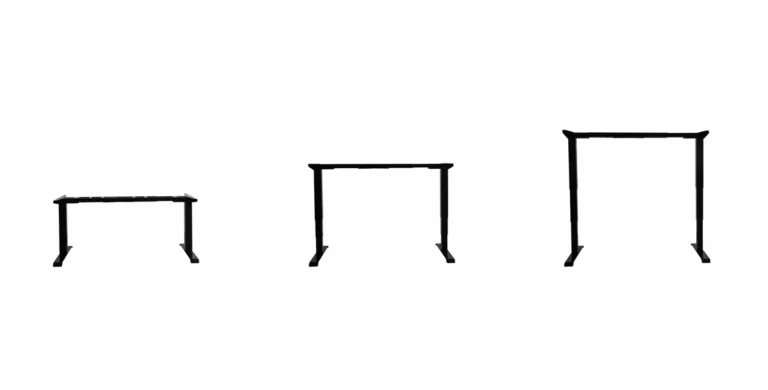
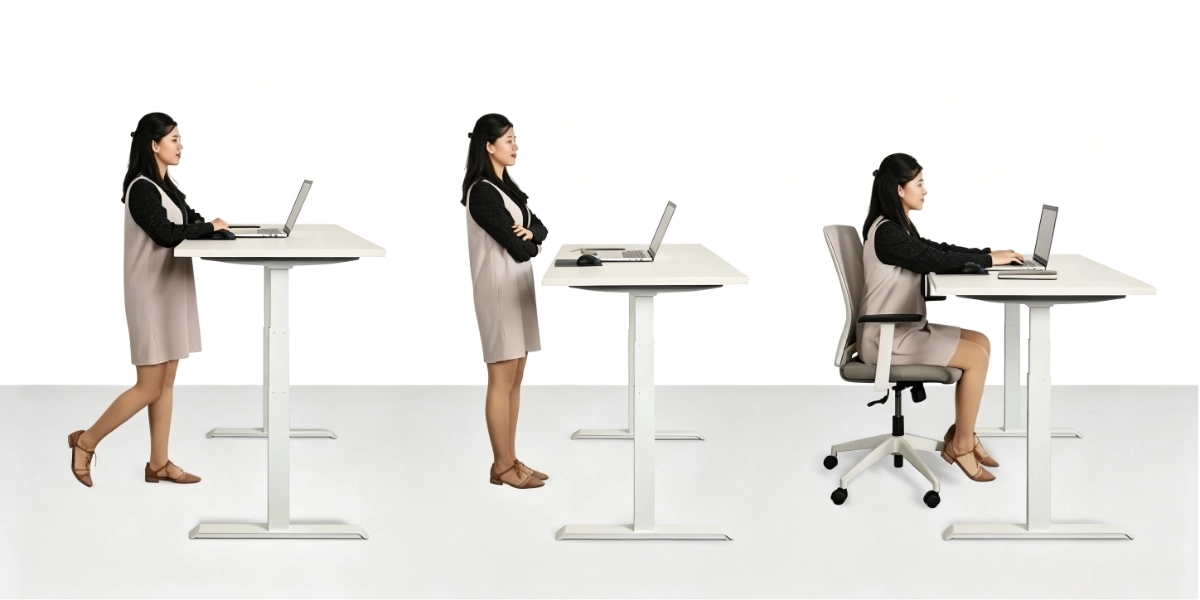
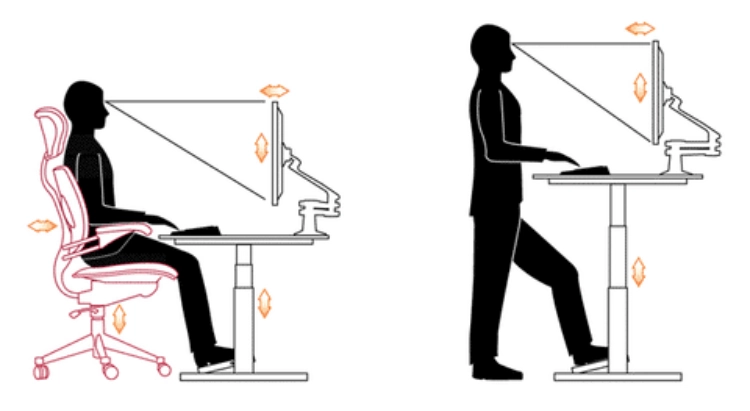
✅ Try standing desks when working: If possible, adjust your workstation and alternate between sitting and standing.
✅ Stand up and go downstairs to pick up a package or take a 5-minute walk: Take a break during your breaks.
✅ Climb a few flights of stairs: An efficient aerobic interval.
2. Mini-Exercise Version (Can be done in place, 5 minutes to rejuvenate)
✅ Toe Raises: Alternately raise your heels while forcefully contracting your calf and thigh muscles. Hold for 15 seconds, then lower. Repeat for 5 minutes to promote blood circulation in the lower limbs and prevent varicose veins.
✅ Chest Expansion Exercise: While expanding your chest, slowly stretch your arms backward to fully open your chest cavity and feel the stretch and activation of your pectoralis major muscles. Repeat 15 times per set to effectively relieve neck and shoulder stiffness and relax upper body muscles.
✅ Neck Lateral Flexion: Quickly relieve neck stiffness. Straighten your back and slowly bring your ears close to your shoulders, feeling the stretch in the muscles on the side of your neck. Hold for 10 seconds, then switch sides. Do 3 sets on each side.
✅ Marching in Place: Alternately raise your feet, mimicking walking movements. 1-2 minutes per set, 3 sets. Marching in place promotes blood circulation and leg coordination, and also aids digestion.
✅ Chair Half Squat: Stand up, facing away from the chair, and touch the chair surface with your buttocks. Hold for 2 seconds, then stand up straight. Keep your knees from going past your toes and your back straight throughout the movement. Do 10 repetitions, relax, and repeat 1-2 sets.
✅ Desk Push-ups: Stand facing a stable desk or wall, with your hands slightly wider than shoulder-width apart, holding onto the edge of the table. Keeping your body in a straight line, slowly bend your elbows, bringing your chest close to the office desk, then push back up. Do 10 repetitions, relax, and repeat 1-2 sets.
It is recommended to set an alarm every half hour or hour to remind yourself to stand up and move around. This simple habit is a cornerstone of workplace ergonomics. Get up after a maximum of 90 minutes of sitting!
Don’t rely on daily exercise to compensate for a sedentary day. A successful workplace wellness strategy isn’t about an hour in the gym — it’s about what you do the other eleven. Starting today, set an alarm, get water, make a phone call, stand up, and move around. Whether at your office desk or on your sofa at home, just getting up a few times a day will quietly thank your metabolism and muscles with greater ease.

At Vaka, we believe that workplace wellness starts with the right tools. Our electric height-adjustable standing desks are designed to help you break the sedentary cycle effortlessly — switch between sitting and standing in seconds, stay focused, and keep your body active throughout the workday. Because true ergonomics isn’t just about posture; it’s about giving you the freedom to move. Explore Vaka standing desks and take the first step toward a healthier, more productive workspace today.